RAW CARROT SALAD
As a general rule, traditional Chinese medicine discourages the consumption of large quantities of raw fruits and vegetables. One exception to that rule, however, is the raw carrot salad for female patients seeking to reverse estrogen dominance and any patient seeking to enhance their body’s capacity to excrete endotoxins and to optimize gut, liver, and thyroid function.
WHY IT WORKS
Most dietary fibers — inulin, pectin, and other soluble fibers — are fermentable. In a gut with small intestine bacterial overgrowth (SIBO) or dysbiosis, fermentable fibers can feed the overgrowth rather than help it. Raw carrot is different: its fiber is almost entirely insoluble cellulose, so it passes through largely undigested. Instead of feeding bacteria, it acts more like a physical binder moving through the digestive tract.
That binding matters most for estrogen clearance. The liver detoxifies estrogen and sends it into the gut via bile for elimination. But dysbiotic gut bacteria can produce an enzyme called beta-glucuronidase, which “unlocks” that conjugated estrogen and allows it to be reabsorbed back into circulation instead of excreted — a process known as enterohepatic recirculation. This is one of the more well-supported mechanisms linking gut bacteria to estrogen levels (sometimes called the “estrobolome”). By binding bile in the gut, raw carrot fiber may help carry that unlocked estrogen out in the stool rather than let it recirculate.
Biologist Ray Peat, whose work popularized this preparation, theorized that the same binding action helps with a related problem: bacterial endotoxin (lipopolysaccharide, or LPS) produced by gram-negative gut bacteria. In Peat’s model, LPS reaching the liver interferes with the liver’s capacity to clear estrogen, and systemically elevated LPS also suppresses thyroid hormone conversion (T4 to T3) and testosterone production. Peat’s theory holds that trapping LPS in the gut lumen — before it’s absorbed — removes some of that downstream burden on thyroid and hormone function. This part of the picture is Peat’s own hypothesis rather than an established clinical mechanism, but it’s the reasoning behind why this preparation is often described as supporting thyroid and hormone balance, not just digestion.
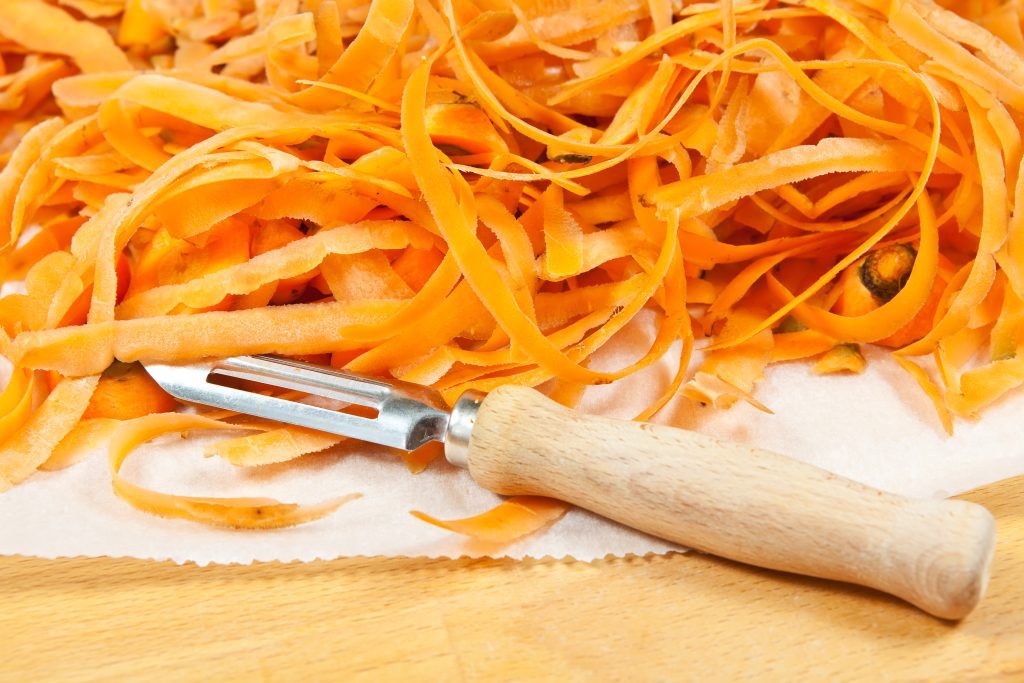
The way the carrot is prepared also matters for gut motility. Shredding lengthwise (rather than grating into small pieces) preserves longer fiber strands, which provide more mechanical stimulation to the gut wall as they pass through — encouraging peristalsis and regular elimination, which is itself important for keeping bacterial byproducts and excess hormones moving out rather than sitting and recirculating.
The other ingredients reinforce the same goal:
- Coconut or MCT oil contains caprylic and lauric acids, medium-chain fatty acids with antimicrobial properties against certain bacteria and yeast.
- Apple cider vinegar lowers the pH of the gut environment, which is less hospitable to pathogenic overgrowth.
- Mineral salt supports metabolic and osmotic balance in the bowel.
HOW TO PREPARE THE SALAD
- Wash one or two organic raw carrots using produce wash.
- Remove the outer layer of the carrots using a peeler and discard.
- Continue using the peeler to shred the rest of the carrot lengthwise.
- Place the shredded carrot in a small bowl.
- Add two to four teaspoons of liquid coconut oil or MCT oil.
- Add a generous splash of unrefined apple cider vinegar.
- Add a generous pinch of mineral sea salt (Baja Gold salt or Redmond’s Real Salt are good options).
- Gently toss all the ingredients to combine.
- Allow the prepared salad to sit for about five minutes until the carrots are slightly softened by the oil and vinegar.
- Consume once or twice a day on an empty stomach, at least two hours before or after a meal.